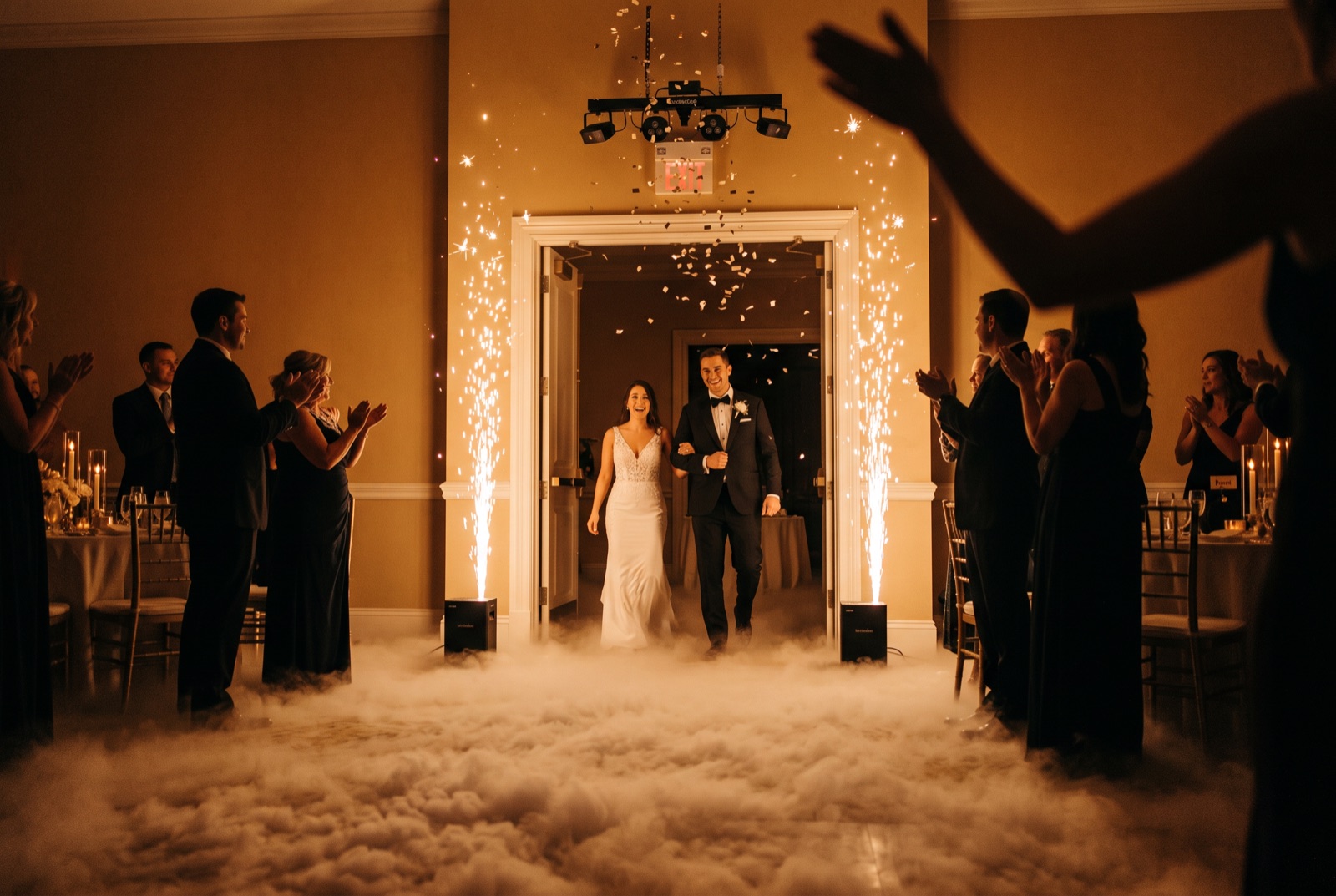
The doors open, the DJ calls your names, and you walk into a room full of the people who love you most. Then two columns of white fog shoot up on either side of you and every phone in the room comes up at once. Honestly, there's nothing better than watching a couple feel that.
That is what CO2 jets do at Miami weddings. They take a moment that is already big and make it land for every guest in the room, not only the front tables.
If you are planning a wedding and wondering whether CO2 jets belong in your night, you came to the right place. This post covers when they work best, what they look like in a real Miami reception, and what to ask before you book anyone.
What CO2 Jets Add to a Wedding
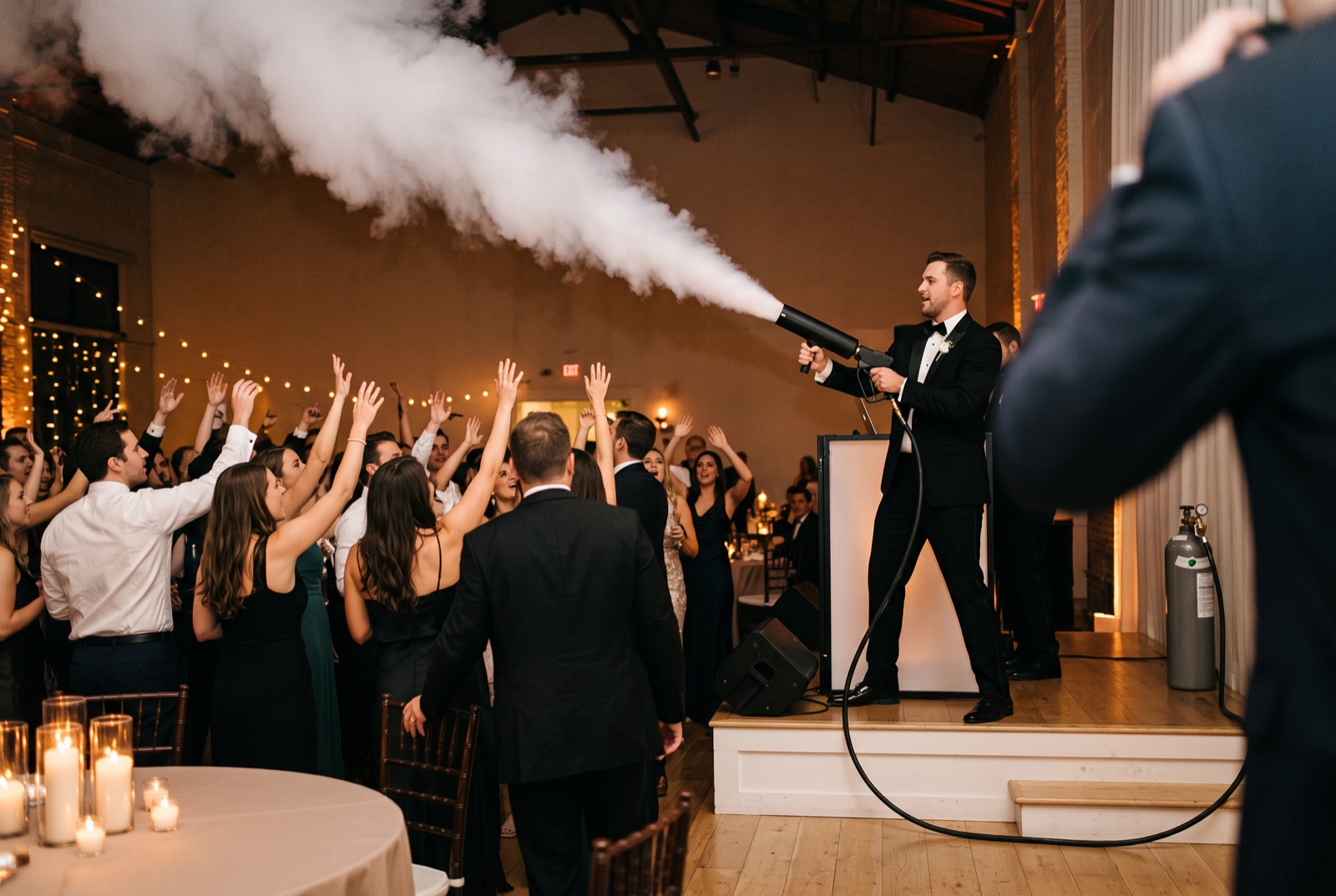
A CO2 jet is a nozzle fed by a tank of liquid carbon dioxide. When it fires, the liquid turns into a tall plume of cold white fog. It is loud, it is fast, and it is gone a few seconds later. Nothing hangs in the air and nothing lands on the dress.
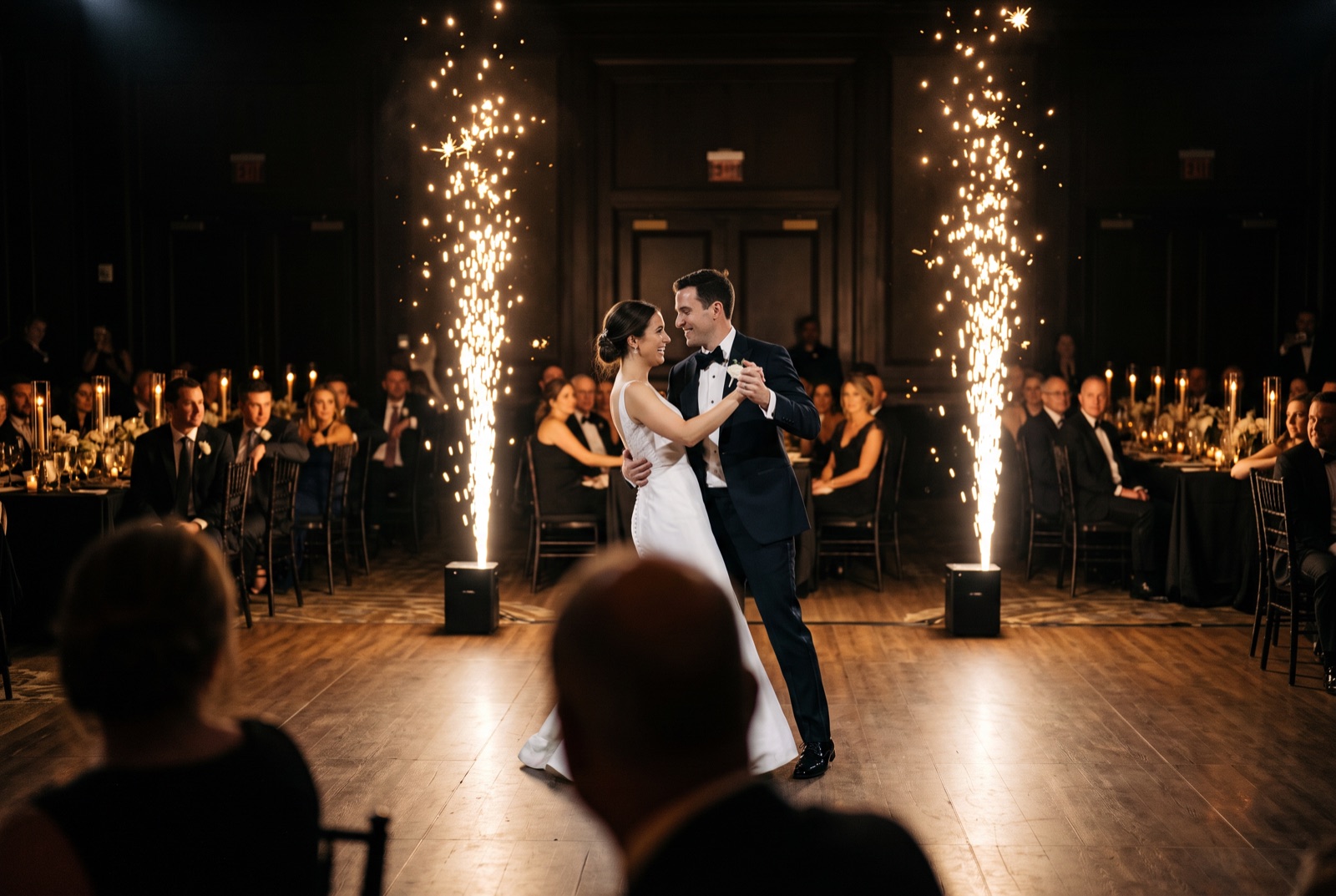
At a wedding, that burst is the point. A first dance wants something soft and slow, which is why couples usually pair it with cold spark fountains. CO2 is for the other side of the night. The entrance, the first song of open dancing, the hora loca, the last song when everyone is still on the floor.
Miami rooms help, too. Our ballrooms run warm, and the fog is cold, so guests feel the blast on their skin a second after they see it. That little shock is what gets a room yelling.
And it photographs well. Your photographer gets a clean white column behind the two of you, lit by whatever color the room is in. That's a big deal when it ends up as the photo your family frames.
What It Looks Like at Real Miami Weddings
The grand entrance is where we fire CO2 jets most at Miami weddings. The bridal party comes in first, the energy builds, and the jets go off the second the couple steps onto the floor. We time it to the beat of your entrance song, so it feels like the music did it.
The hora loca is the second big one. The masks come out, the percussion kicks in, and the jets push the floor somewhere it has not been all night. A lot of our families tell us this was the moment their grandparents talked about the next day.
Then there is the last song. Most couples forget about it until the planning call, and then they want it. Everyone is still dancing, the night is almost over, and one final blast sends people home on a high.
The room changes how we do it. A high ceiling ballroom in Coral Gables or Bal Harbour can take a full height blast. A rooftop in Brickell, a waterfront reception in Fort Lauderdale, or a tented wedding in the Redland needs a lower angle and shorter bursts, because wind moves the fog and a low ceiling stops it. We walk the space first, or review photos and measurements, and plan from there.
What to Look For When You Hire
CO2 jets at Miami weddings look simple from the dance floor, but they are easy to get wrong. A few questions early tell you who has done this before.
Ask who is on the trigger. The whole effect is timing. If the jets fire a beat late on your entrance, the moment is gone and you do not get it back. You want the person running the music to be the person firing the jets, or at least standing next to them with the same run of show.
Ask how many blasts you are getting. A tank holds a limited amount of gas, so a vendor should tell you plainly how many moments you are buying. If they are vague, they are planning to run out before the last song.
Ask about the venue. Some Miami venues need the effect approved ahead of time, and some have rules on where equipment can sit. A good vendor raises this before you do and handles it with the venue coordinator directly.
And ask about safety around your guests. The nozzle fires cold enough to hurt skin up close, and a wedding floor has kids, grandparents, and a long dress. The jets should be placed and angled so nobody ends up in the path of the blast.
How Baseline Studio Handles CO2 Jets for Miami Weddings
We started as a DJ company. CO2 came in because our couples kept asking for the feeling they had at the club, so we built it into how we run the night. When you book CO2 jets through Baseline Studio, the jets live on the same run of show as your music, and the drop and the blast are one cue.
We bring the tanks, place the jets after we see your room, and clear everything with the venue ahead of time. Then we plan the shots with you. Your entrance, the hora loca, the last song, or whatever moments matter most to the two of you. If your wedding DJ is ours too, there are no two vendors guessing at each other's timing.
We love this part. Your wedding is one of the biggest nights of your life, and we don't take that lightly. You enjoy your wedding. We'll handle the rest. How does that sound?
Tell us your date, your venue, and the moments you want to hit. We will tell you where the jets should go, how many blasts make sense, and what it costs. Call us at (786) 842-8464.
Explore CO2 Jets Get a QuoteFrequently Asked Questions
CO2 jets for a Miami wedding are quoted per event. The price depends on how many jets you want, how many blasts you need, and how long we are on site. Adding them to a package that already includes your DJ and lighting usually costs less than booking a separate effects company, because the setup and the operator are already there.
Yes, when they are placed and run correctly. The fog is carbon dioxide and condensed water vapor, and it clears in seconds without leaving residue on clothes or hair. The nozzle fires very cold up close, so we angle the jets away from guests and keep an operator with them the whole night.
CO2 fog is not smoke, so it usually does not trip the detectors the way haze or fog machines can. We still clear the effect with your venue coordinator before the day, because some Miami venues have their own rules about special effects and where equipment can sit.
The grand entrance is the most popular moment, followed by the first song of open dancing, the hora loca, and the last song of the night. We plan the shots with you ahead of time and fire them on the beat, so each blast lands with the music.
Yes, and a lot of couples do. Cold sparks suit the first dance because they are slow and soft. CO2 jets suit the high energy moments once the party opens up. We run both on the same timeline so they never compete for the same moment.