You've been to the corporate event where the mic cuts out during the CEO's opening remarks. Where the "screen" is a hotel TV nobody can see past row four. Where the lighting is just whatever the ballroom came with, flat and fluorescent, and the whole room feels like a meeting that ran long.
And you've probably also been to the one where none of that happened. Where the sound was clean, the stage looked intentional, the video wall made the numbers land, and somehow the whole thing just moved. That difference isn't luck. That's corporate event production.
If you're planning something for your company in Miami and you're trying to figure out what production actually means and who's worth hiring for it, this is what we've learned running these events for years.
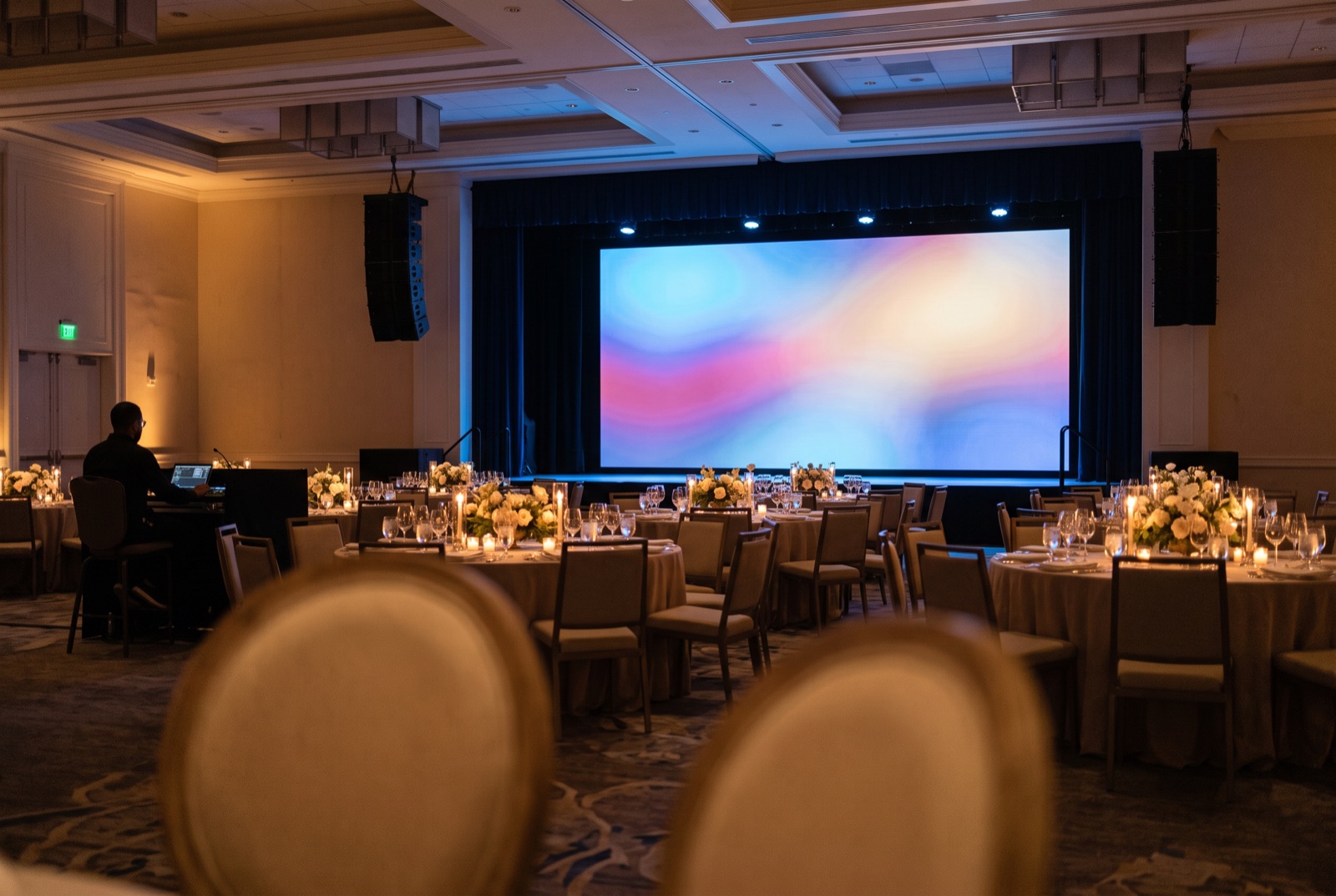
What Corporate Event Production Actually Means
Corporate event production is everything that turns a room into an experience instead of a rental. Sound that reaches the back row clean. Stage lighting that makes your speakers look like they belong up there. An LED video wall for keynotes, brand content, or live camera feeds. TV displays for breakout sessions. Gobo projection for a logo on the floor at check-in. Staging, power, and a run of show that ties it all together.
None of that works well if it's five different vendors who've never met. A lighting company that doesn't know what the AV company is doing. A DJ who's never seen the room. That's how you end up with a keynote where the lighting cue misses and the video wall lags a beat behind the slide.
Real production means one team owns the technical experience end to end, from the first walkthrough to the last cue of the night. That's what corporate event production Miami companies are supposed to deliver, and it's the part that's easy to underestimate until you've sat through an event without it.
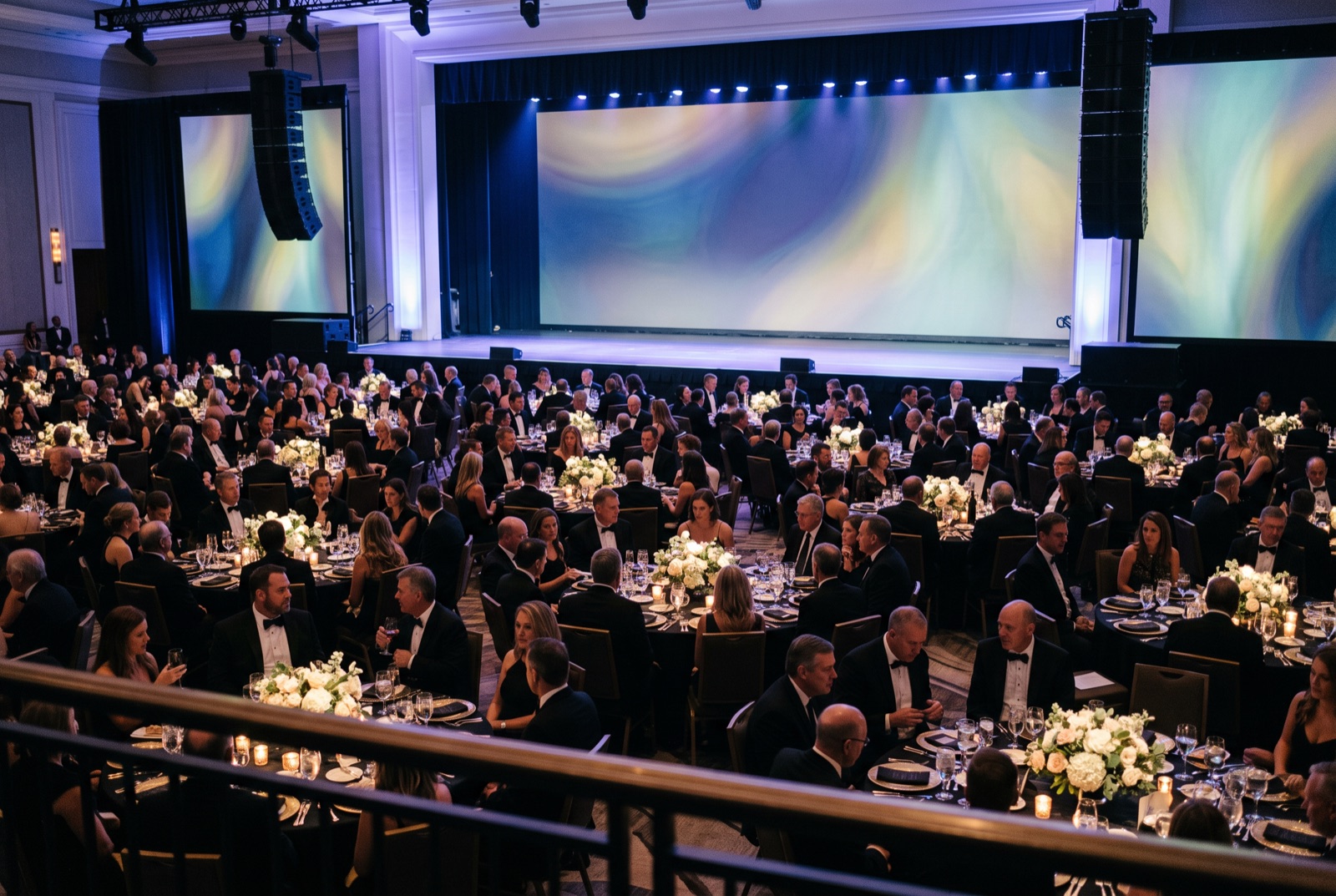
What It Looks Like At Real Miami Events
A product launch in Wynwood needs different production than a shareholder dinner at the Biltmore in Coral Gables, and both need something different than a general session at the JW Marriott Marquis downtown.
The Wynwood launch is usually about energy and brand presence. LED walls playing motion content, uplighting in brand colors, a DJ keeping the room moving between announcements. The Biltmore dinner is quieter and more precise. Warm stage lighting, clean sound for toasts, maybe string lights over the courtyard if it's outdoors. The downtown general session is about clarity. Every attendee needs to see the slide and hear the speaker, which means proper PA coverage, a video wall or confidence monitors, and lighting that doesn't wash out the presenter's face on camera.
We've run all three types of rooms across Brickell, Aventura, Fort Lauderdale, and Miami Beach, and the pattern holds. The venue and the goal decide the production, not the other way around. A good production partner asks what you're trying to accomplish before they quote you a package.
What To Look For When Hiring a Production Company
Ask if they're bringing one coordinated team or subcontracting out pieces you'll have to manage yourself. A single point of contact for lighting, sound, and video matters more than most people realize until the day-of timeline shifts and someone has to make three calls instead of one.
Ask about backup equipment. Mics fail. Cables fail. A production company that shows up with redundancy built in isn't being paranoid, they're being careful.
Ask if they've worked your specific venue before. Load-in windows, power access, and ceiling rigging points vary a lot between a hotel ballroom and an outdoor Wynwood space. Experience in the room saves you from surprises on the day.
And ask how they handle rehearsal. A speaker who's never heard their own mic through the PA before showtime is a risk. A short sound check the morning of solves that, and any production company worth hiring should build it into the timeline without you having to ask.
What Baseline Studio Does Differently
We run corporate event production as one team, not a stack of vendors we're hoping talk to each other. Sound, stage lighting, LED, and staging come from the same production plan, built around your run of show from the start.
We coordinate our PA and sound engineers with our lighting and video crews so cues actually land together. We do a full walkthrough before your event, not the week before. We test every mic, every cable, every content file. That's a big deal on a day where you don't get a second take.
We don't take that lightly, especially for corporate clients whose reputation is riding on the room feeling as sharp as the brand they're presenting. You've got enough to manage on the day of your event. You run the meeting, we'll run the room.
Tell us your venue, your guest count, and what this event needs to accomplish. We'll put together a production plan built around your goals, not a generic package. How does that sound?
Corporate Event Production Get a QuoteFrequently Asked Questions
Corporate event production covers everything that makes a room work as one experience, sound, stage lighting, LED video walls, gobo projection, TV displays, staging, and the coordination that ties it all together on a single timeline. It's the difference between renting a projector and having a team that runs your whole event.
It depends on guest count, venue, and how many production elements you need. A small breakfast briefing with a mic and a screen costs far less than a 500-person gala with an LED wall and full stage lighting. We quote every corporate event based on the specific room and goals, not a flat package.
Six to eight weeks is a safe window for most corporate events in Miami, and earlier is better for peak season, October through May, or for larger conferences and galas that need custom staging or LED walls. If your date is set, lock in production early.
Yes. Multi-day conferences need consistent production across general sessions, breakouts, and evening events, often in different rooms with different requirements. We build one production plan that covers the full run of show so your AV and lighting don't have to be re-solved every day.
An event planner handles logistics, venue, catering, vendors, schedule. A production company handles the technical experience, sound, lighting, video, staging. Many corporate events use both, and we work directly with planners constantly. We can also serve as the sole production partner if logistics are already covered.
Baseline Studio
Interested in this service?